Exploration of Wearable Sensor Measures Associated with Panic Attacks Differ Across Mental Health Conditions
Dheeraj Dhanvee Kairamkonda, Ellen W. McGinnis, Matthew Price, Johanna E. Hidalgo, Julia Kim, Jordan Llorin, Kathryn Stanton, Laura S. P. Bloomfield, Mikaela Irene Fudolig, Jennifer Ha, Natalie Noble, Josh Cherian, Guido Mascia, Nathaniel S. O'Connell, Jason Fanning, Peter Sheridan Dodds, Chris Danforth, and Ryan S. McGinnis
Frontiers in Digital Health, 8, , 2026
Times cited: 2
Abstract:
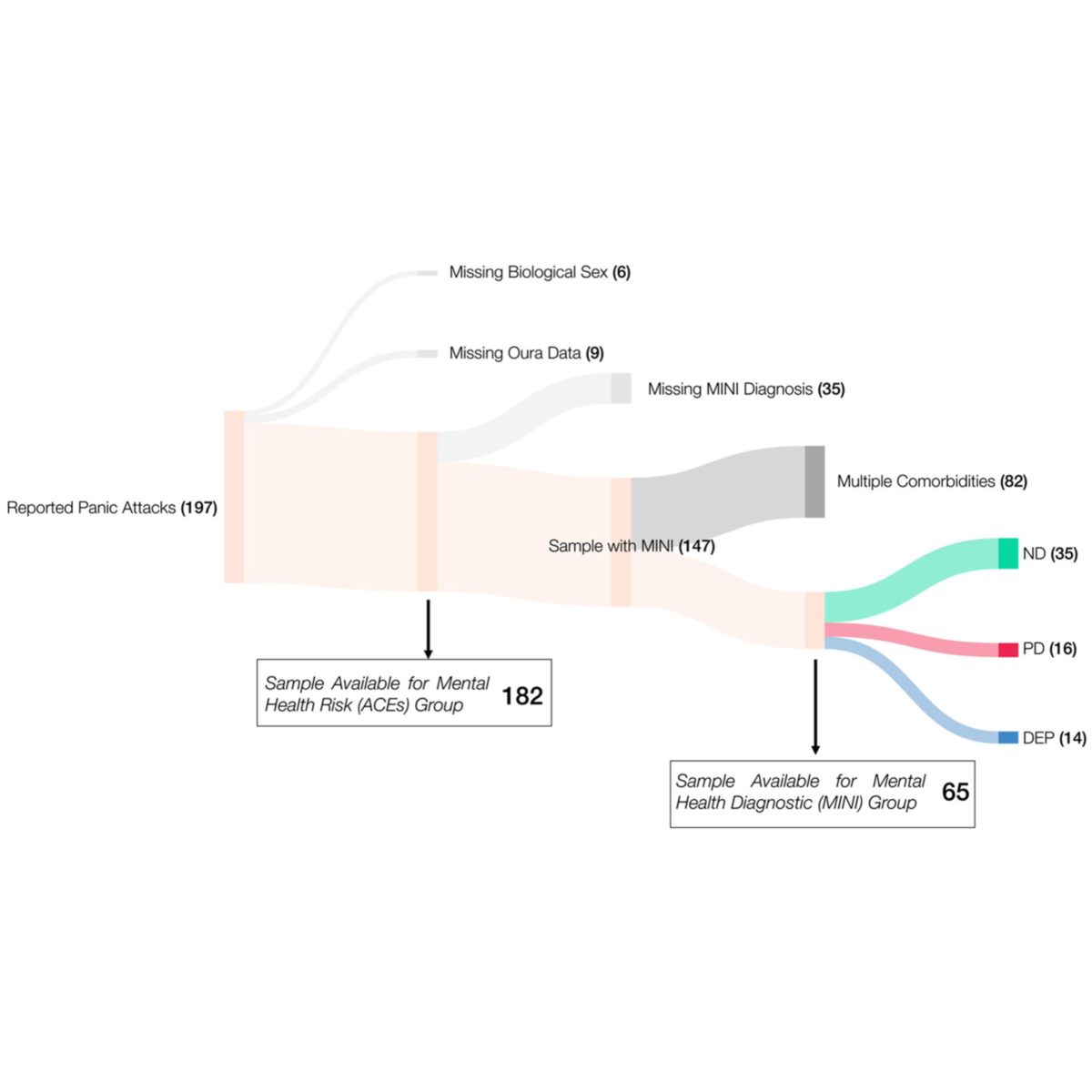
Panic attacks (PAs) are acute anxiety episodes that are pervasive, with one in ten individuals having experienced a PA in the past year. PAs impair daily functioning and are associated with increase in emergency room visits and suicide attempts. Despite their impact, the unpredictable nature of PAs makes them challenging to manage. PAs are transdiagnostic, occurring in individuals across and without mental health diagnosis. However, prior work has largely focused on PA indications within individuals with panic disorder. This study identifies PA risk factors from over six months of passive sensing data recorded by Oura Rings in 182 young adults with and without adverse childhood experiences (ACEs) and psychiatric diagnoses, beyond just panic disorder. Our findings reveal that changes in Oura Ring-derived measures are associated with next-day PAs, with distinct associations observed across different mental health diagnoses. For individuals with panic disorder, PA likelihood increases with time spent inactive. For those with depression, PA likelihood increases with decreased variation in nightly respiratory rate, decreased REM sleep, and increased time spent in high-intensity activity. For those without a mental health diagnosis, PA likelihood increases with decreased heart rate variability. Data aggregation window sizes that capture the associations with PA risk varied by diagnosis and the type of feature, suggesting that cumulative physiological patterns from windows up to seven days before a PA contribute to onset. These findings point to the possibility that continuous monitoring of panic attack risk could one day support preventative mental health intervention.
- This is the default HTML.
- You can replace it with your own.
- Include your own code without the HTML, Head, or Body tags.